
Best Luxury Sleep
Wake Up More Ready.
Every Single Day.
If you’re sleeping but not waking up restored, the issue isn’t always how long you sleep — it’s how your body is supported overnight.
We design sleep recovery systems that optimize alignment, stability, and pressure distribution — so your body can rest more consistently and you wake up ready for the day ahead.
Sleeping Isn’t the Same as Recovering
Many people spend eight hours in bed and still wake up feeling tired, tense, or unrested.
That doesn’t mean sleep failed.
It means recovery conditions were compromised.
Recovery Depends on Conditions
How rested you feel in the A.M. is influenced by how your body is supported overnight.
Key factors include:
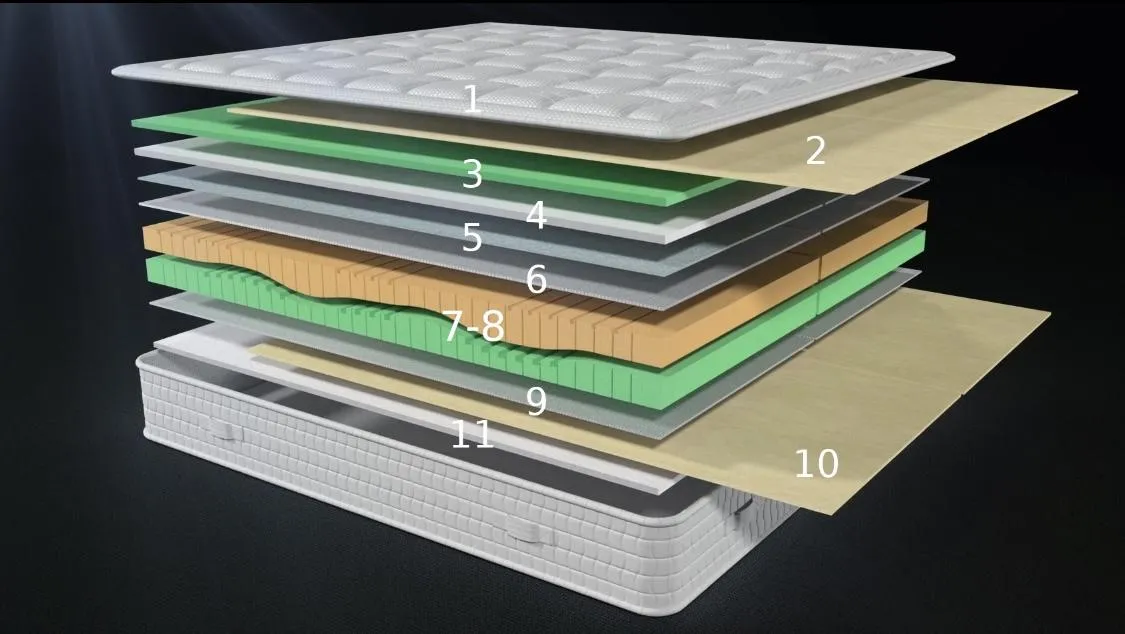
Neutral spinal alignment under natural body weight
Even pressure distribution across contact points
A stable surface that minimizes unnecessary movement
Materials designed for consistent comfort and temperature balance
When these conditions aren’t met, rest becomes lighter and less consistent — even if sleep time is adequate.

Common Signs Your Sleep Surface May Be Working Against You
If any of the following sound familiar, recovery is likely being impaired:
Waking up tired regardless of sleep duration
Morning stiffness or tension
Tossing and turning through the night
Light or inconsistent sleep
Relying on caffeine to get going
Feeling like sleep “isn’t what it used to be”
These experiences are common — but they’re not random.
They often point to a sleep setup that isn’t aligned with how the body rests best.
This Is Not a Conventional Mattress
Most mattresses are designed for softness or short-term comfort.
Our systems are designed to support recovery capacity by maintaining alignment, stability, and consistency night after night.
This is sleep infrastructure — not retail guessing.
The Sleep Recovery Evaluation
The Sleep Recovery Evaluation is a structured, in-home assessment designed to identify what is preventing your body from recovering while you sleep.
This is not a sales visit.
It is an evaluation of recovery conditions.
During the assessment, we examine:
Sleeping posture and spinal alignment
Pressure distribution and circulation interruption
Signs of nervous system stress while resting
Whether your current sleep surface supports or obstructs recovery
Environmental and electrical factors that affect deep repair
The outcome is clarity — whether or not you choose to move forward.
What Happens Next
1. Apply for a Sleep Evaluation
2. Schedule your in-home visit
3. Complete a brief pre-assessment
4. Receive personalized findings and recommendations
No pressure.
No obligation.
Just clarity.
You Spend 1/3 of Your Life in Bed.
That time should restore your body — not contribute to cumulative stress.
To ensure quality and personalization, evaluations are limited to 20 each month.
You don’t need more sleep.
You need better recovery.
And it begins the moment your body stops fighting the surface beneath it.
Every upgrade you've made in life has improved the way you live. Imagine what happens when you upgrade the one thing that fuels it all - your Sleep Recovery. The right system can change everything,
© 2024, V8tality.